
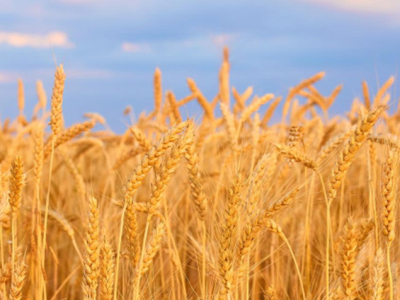
Wheat is the second most important cereal after maize in the food security basket in Zimbabwe. The production of various products such as bread, buns and cakes has made the crop popular with the general populace. Its importance is broadly two pronged i.e. to the farmer and to the nation.
To the farmer
It is one of the crop ventures with a very lucrative return on investment. The return per dollar invested for wheat is about $2-$3 under high productivity levels. After investing about $2000.00/ha, a farmer can get a total income of about $4000.00 (at 8 tonnes/ha and @$500/tonne), giving a gross profit of about $2000.00/ha. We can imagine a farmer doing 200ha getting between 8 and 11 tonnes/ha.
It is also a major viable component of double cropping set ups. We have always been encouraging farmers with irrigation to adopt the double cropping concept in order to improve their bottom and top line stories at farm level as well as to spread coverage of fixed costs per year. Growing wheat in winter also aids spread of cash flow on the farm.
The basic farm business principle is that farmers should have at least 2 major crop harvests per year supported by other complimentary crop sales/ventures after every two months. We generally recommend diversity in terms of crops and other non-crop ventures on the farm. This generally ensures smooth running of farming concerns. Maize-Wheat-Maize or Soybean-Wheat-Soya bean are some of the common rotations. The same machinery, especially combine harvesters, can be used to harvest both the winter and summer crops.
To the nation
Since the nation is in a drive for import substitution, producing wheat locally will result in forex savings which would otherwise be channelled to other more productive related priorities of the economy. The national annual wheat/flour requirement is about 350 000 metric tonnes and over the years Zimbabwe was producing less than a quarter of that. One can imagine the savings if we can produce this requirement locally.
Producing wheat locally will create employment directly at farm level (agriculture value chain) and indirectly (other value chains), upstream and downstream industries such as milling, baking and food outlets. Currently wheat contributes between 4-5% (a significant chunk) to the agriculture GDP. Producing this annual national requirement locally will surely double if not triple its contribution to the agriculture GDP. Ultimately we can also expect an increase in agriculture GDP contribution to the national GDP from the current range of 20-30% upwards.
This week we are going to share some agronomic considerations to increase wheat productivity and production in Zimbabwe.
Planning for wheat production
The standard cost structure for wheat at high management levels ranges between $1700 and $2100/ ha at full absorption (i.e. incorporating all variable costs). This cost outlay is huge on a per hectare basis and as such farmers should always aim to achieve higher yields in the upwards of 6 tonnes per hectare for them to realise a margin. Zimbabwe used to achieve some of the highest national average yields of wheat between 5-6t/ha in the past as compared to the current global average of 2.5 – 3t/ha.
The genetics (varieties) are still there and if we get our management right, we can achieve in excess of 10t/ha in the high potential areas. Let us tap into the genetic gains. Using the current GMB prices, the break-even yield (when the gross profit is zero) is 4 tonnes/ha. Some good farmers are getting above 8 tonnes per ha and even up to 11 tonnes/ha. We can imagine the returns in such cases. It is imperative to adopt Good Agronomic Practices (GAPs) to improve productivity levels and in order to optimise our top-lines and bottom lines at farm level-the ultimate end game!
Soils and climate
Wheat is a temperate crop and is best grown in winter under irrigation with optimum day temperatures of between 15 – 20OC and cooler nights giving the best yields. There are some varieties that may be grown in summer (such as Sahai), but generally there is high disease and weed pressure in summer accompanied by warmer temperatures that result in depressed yields (≤ 3t/ha), therefore, winter is the best time for growing wheat.
The crop is adapted to a wide range of soils. The soils must be well drained with an optimum pH range of 5.5-6.5 on a Calcium Chloride scale. Wheat yields are greater in the highveld (>1200 masl (metres above sea level)) and middleveld (800 – 1200 masl) with yield potential of 8 to 12 t/ha compared to the lowveld (




0 Comment (s)
Post your comment